
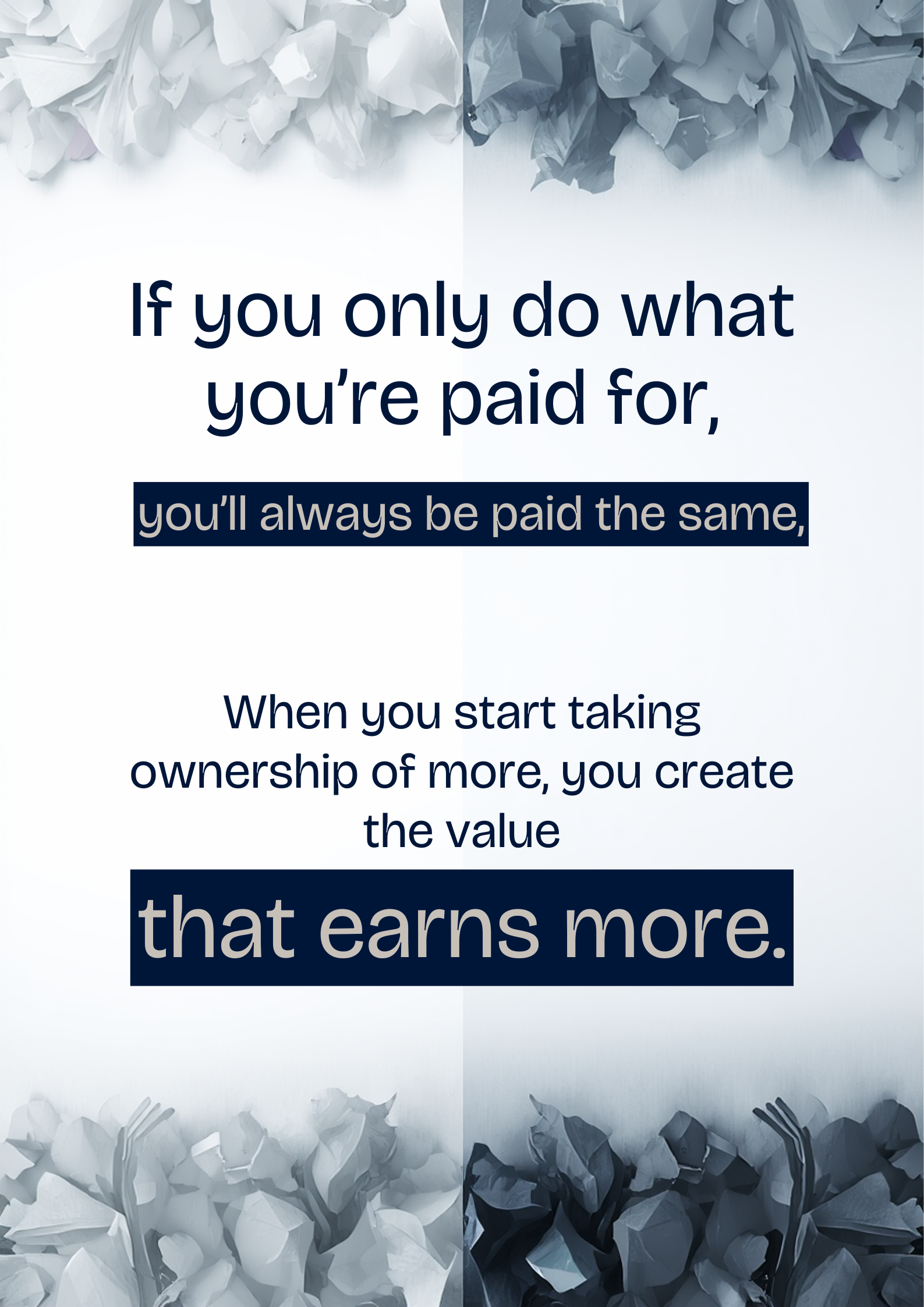
“I don’t get paid to do that.”
Almost every construction leader has heard it at some point:
Sometimes it’s said jokingly, but many times it’s said when someone is asked to take responsibility for something outside of what they believe is strictly their job description.
Maybe it’s checking the quality of the work before moving forward.
Maybe it’s making sure the crew is working safely.
Maybe it’s helping solve a problem that’s slowing production.
Instead of stepping up, the response becomes a way of stepping away from responsibility.
But what makes this situation interesting is that the same person who says “I don’t get paid to do that” is often the same person who wants:
- More pay
- More respect
- More authority
- To be viewed as equal to supervisors or leaders
The problem is that leadership and respect don’t come from titles or pay raises. They come from how a person handles responsibility.
Responsibility Comes Before the Raise

In construction, promotions and raises usually follow a simple pattern:
People who take ownership get trusted with more responsibility.
And when someone consistently proves they can handle responsibility, the opportunities for higher pay and leadership roles follow.
But when someone avoids responsibility, it sends a different message. It tells everyone around them that they are comfortable doing the minimum required — nothing more.
That mindset makes it very difficult for anyone to trust that person with a bigger role.
Quality, Production, and Safety Belong to Everyone

Another problem with the “that’s not my job” mindset is that it ignores something fundamental about construction work.
Quality, production, and safety aren’t just the responsibility of one person.
They belong to everyone on the site.
If a pipe layer notices something that doesn’t look right with the installation, speaking up protects the quality of the job.
If someone sees a safety hazard, addressing it protects the crew.
If something is slowing production, helping solve that issue keeps the project moving forward.
When people take ownership of these things, the entire jobsite runs better.
Respect Is Earned Through Reliability
Respect in construction isn’t given because of a title.
It’s earned through consistency.
The workers who earn respect are the ones who:
- Show up ready to work
- Handle problems without constant complaining
- Help the team when things get difficult
- Stay focused on the job even when things don’t go their way
Those are the people that supervisors trust.
Those are the people crews listen to.
And those are the people who eventually get asked to step into bigger roles.
Don’t Take Your Ball and Go Home
Every jobsite has tough days.
Plans change.
Weather interferes.
Problems appear that no one expected.
The difference between someone who grows into leadership and someone who stays stuck in the same role often comes down to how they respond when things don’t go their way.
Some people shut down.
They complain.
They withdraw from the work.
It’s the jobsite version of taking their ball and going home.
But strong leaders do the opposite.
They stay steady.
They keep working through the problem.
They focus on solutions instead of frustrations.
That mindset is what builds trust over time.
If You Want More, Show More
Everyone wants to be paid well and respected for the work they do.
There’s nothing wrong with that.
But the people who move forward in construction are usually the ones who prove something first:
They show that they are willing to take responsibility even when it’s not specifically written in their job description.
They show that they can be relied on when things get difficult.
They show that they care about the success of the job — not just the limits of their task.
Final Thoughts
The phrase “I don’t get paid to do that” might seem small in the moment, but it reveals a lot about a person’s mindset.
In construction, the people who grow into leadership roles are rarely the ones who limit themselves to the bare minimum.
They are the ones who step forward, take ownership, and prove they can be trusted with more.
And over time, those are the people who earn the pay, the respect, and the opportunities they were looking for all along.
Leave a Reply