
Let’s be honest.
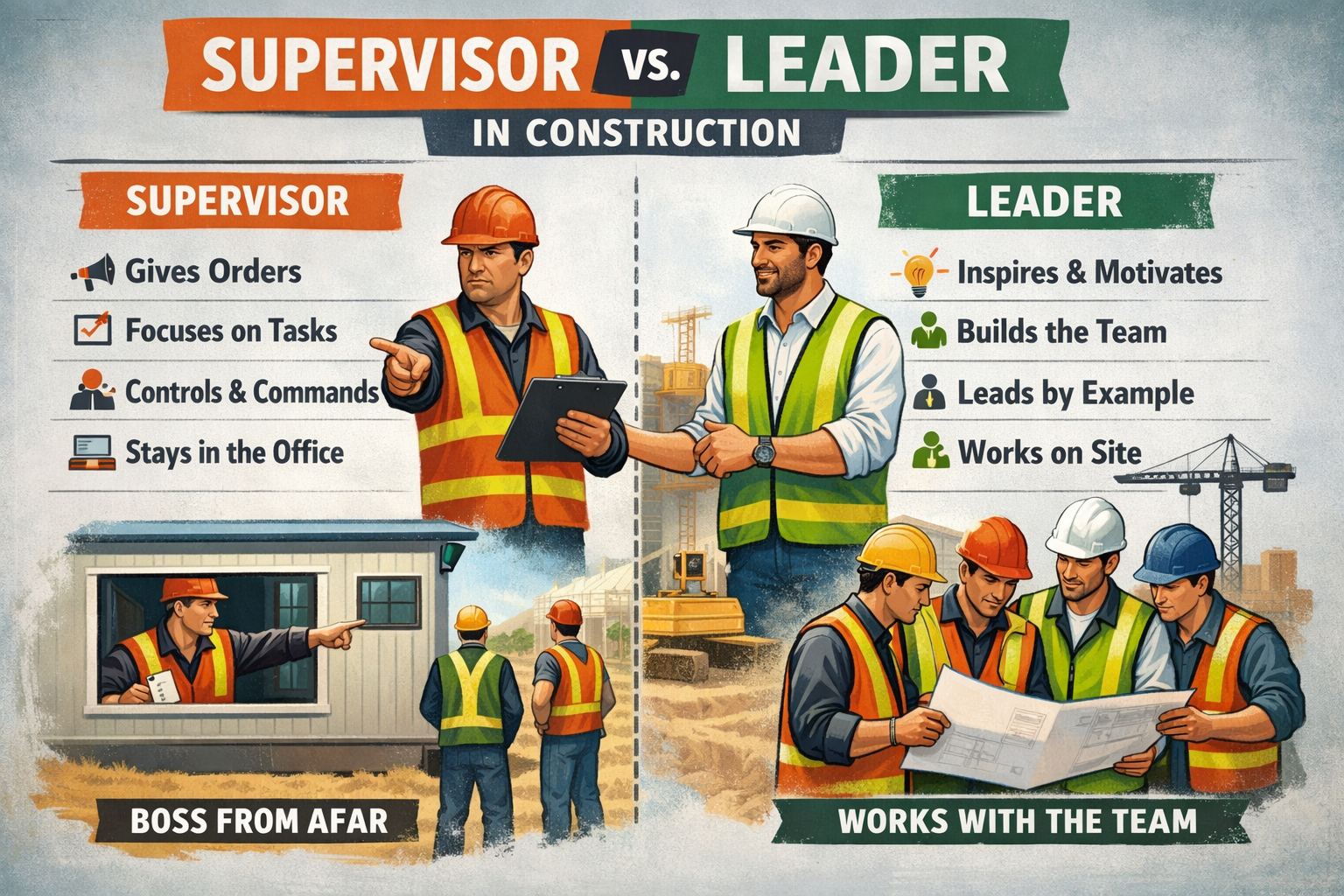
There’s a big difference between a supervisor and a leader on a jobsite. Most of us have worked under both, and most of us have been both.
It’s not about title. It’s not about years in the trade. It’s about how someone operates when pressure hits.
Here’s what separates them.
Reacting vs Planning

We’ve all had those days. Concrete shows up early. The wrong material gets delivered. A sub doesn’t show. A waterline blows out. An inspector appears out of nowhere. Something gets damaged.
A supervisor reacts all day long. They’re busy, constantly moving, but it feels like the job is dragging them around.
A leader still handles problems, but they’re usually ahead of them. They’re looking at next week. They’re checking two weeks out. They’re confirming materials early and identifying constraints before they become delays.
The difference isn’t workload. It’s whether you’re steering the job or just hanging on.
Blaming vs Documenting

When something goes sideways, it’s easy to hear:
“That wasn’t my fault.”
“They never told me.”
“The sub dropped the ball.”
That’s supervisor talk.
Leader talk sounds different. Leaders document.
They log when materials showed up. They record what was said in meetings. They track weather impacts and manpower levels. They keep written records of decisions.
When issues come up later, they don’t argue. They reference.
Blame creates friction. Documentation creates stability. This is something I struggled with for years. The more I was asked about something that happened months ago, the more I realized that documentation could save you those moments of gut-wrenching thoughts of failure. The moment you get pulled into a deposition, you begin to question your decisions you made long ago. Documentation is the only thing that keeps you from looking over your shoulder. It also helps you think about things on a more responsible level.
Emotional vs Factual Communication

Construction is high pressure. Emotions run high.
Supervisors who lead emotionally fire off texts, escalate frustration, and speak before thinking.
Leaders communicate clearly and factually.
Instead of saying, “You guys are always behind,” a leader says, “Per the schedule, framing was due Friday. We’re currently at 60 percent. What’s the recovery plan?”
Same issue. Completely different delivery.
Facts lower temperature. Emotion raises it.
Short-Term Thinking vs Long-Term Thinking

A supervisor is trying to get through today. A leader is thinking three weeks ahead.
Short-term thinking sounds like:
“Let’s just get it done.”
“We’ll deal with that later.”
Long-term thinking asks:
What happens if that delivery is late?
Will this sequencing cause rework?
How does this affect closeout?
Short-term decisions feel productive. Long-term thinking prevents disasters.
The Real Difference: Structure

Leaders build systems.
They don’t rely on memory. They don’t rely on random texts. They don’t rely on “I’ll remember.”
They use daily logs, weekly plans, lookaheads, material tracking, and communication records.
Not because they love paperwork. Because they hate chaos.
Structure keeps your head clear. And clear heads make better decisions.
Leadership Isn’t Louder — It’s Calmer

The best leaders on jobsites aren’t the loudest people on site.
They’re steady.
When something goes wrong, they don’t panic. They don’t yell. They adjust the plan and move forward.
That calm confidence comes from preparation. I have struggled with this for years and as I have had some amazing mentors in my life, I picked up some of these skills.
Final Thought
Most supervisors start as reactors. I did. The shift happens when you decide to plan instead of reacting, document instead of blame, communicate with facts instead of frustration, and think ahead instead of just surviving today.
That’s when you stop just running work and start leading it. This is an ongoing thing that gets easier with time. It gets hard for humans to control their emotions with those they have close relationships with, as you do when you work with people very close for years. If you would like to read more on this topic there was a good article I read last month.
https://www.monitask.com/en/blog/boss-vs-leader-understanding-the-key-differencesLeadership Isn’t Louder — It’s Calmer
Leave a Reply