
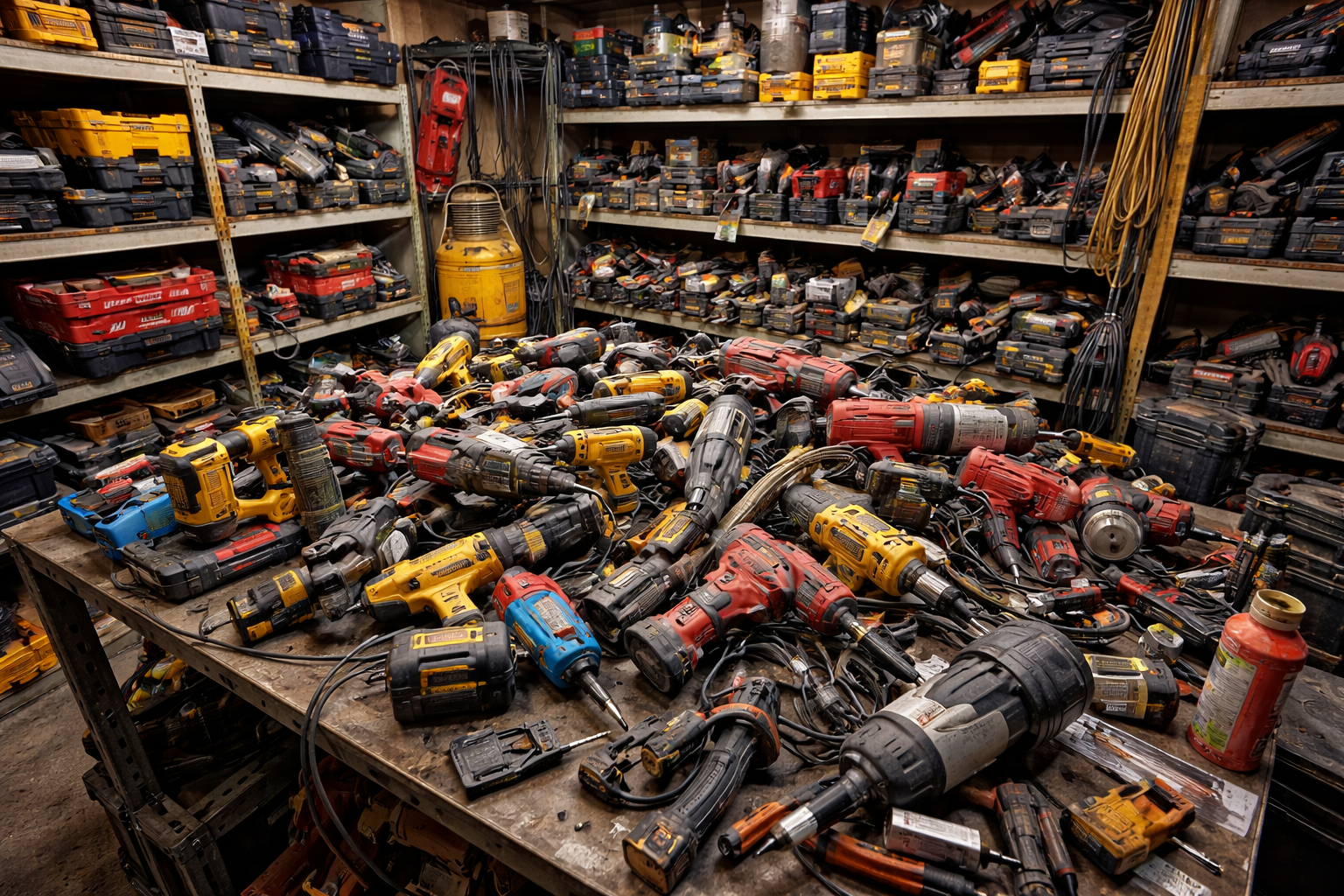
Company tools
If you’ve worked construction long enough, you already know how this goes: tools disappear, nobody knows who had them last, and somehow the company ends up buying the same thing twice. It’s frustrating, it wastes time, and it definitely wastes money.
That’s why we started using Share My Tool Box. I’ve been using it at work for a few years now, and when it’s used the right way, it makes a huge difference.
How Share My Tool Box Works (No Overcomplication)
The idea is simple. Every tool the company owns gets logged into the system and assigned to a person, truck, or job. Instead of guessing where something went, you can pull it up and see exactly who has it and where it’s supposed to be.

It works in the real world too—not just from a desk. Whether you’re in the shop or out on a jobsite, the information is right there as long as people actually keep it updated.
Adoption Is the Make-or-Break Factor
Here’s the honest truth: Share My Tool Box works really well, but only if everyone uses it.
When the whole crew buys in—checking tools in and out, updating transfers, and treating it like the official record—it’s solid. You know what tools you own, where they are, and who’s responsible for them.
When only a few people use it? That’s when things get messy. Tools don’t get updated, records fall behind, and suddenly the system looks unreliable. It’s not the software’s fault—it just needs everyone on board.
Transferring Tools Between People Is a Big Win

One feature that gets overlooked but is incredibly useful is tool transfers. When a tool moves from one person or crew to another, it gets logged in the system.
That means no more:
- “I thought you had it”
- “It was on the last job”
- “Someone must’ve taken it”
There’s a clear handoff, and everyone can see it.
Why It Helps the Whole Company
This is where Share My Tool Box really pays off.
When a company can actually keep track of its tools, it stops wasting money rebuying things it already owns. Fewer lost tools means lower costs, and lower costs mean higher profits.
And when profits go up, good things tend to follow:
- Morale is better
- Raises are easier to justify
- The company is healthier overall
It also cuts way down on finger-pointing. Instead of arguments about who lost what, there’s a record. That alone takes a lot of stress out of the job for everyone involved.
Final Thoughts
After using Share My Tool Box for several years, I can say it’s one of those tools that actually does what it’s supposed to do—as long as the company commits to it. When everyone uses it consistently, tool tracking becomes easier, losses go down, and accountability goes up.
It’s not about micromanaging people. It’s about protecting company assets, saving money, and making work smoother for everyone. And your equipment manager can finally not be mad all the time. (sorry Lionel, if you are reading this, this one’s for you)
Leave a Reply